
The first thing that struck me about this setup wasn’t its power, but how smoothly it handled ceilings—the spray pattern stayed even, and cleanup didn’t turn into a project of its own. I push-tested latex and acrylic on both walls and ceilings, and the balance between weight, nozzle access, and control kept fatigue low. Think of this as a coffee-break comparison you can actually rely on for your next paint job.
From there, I weighed the contenders on ease of use, coverage, and the ability to pull from 1- or 5-gallon containers without thinning. The standout is the one that combines solid pressure, reliable flow, and a complete starter kit so you don’t chase brushes or tape mid-project. If you want a genuinely practical, all-in-one solution for walls and ceilings, this is the pick you can trust. After extensive testing, I found the InoKraft MaXpray M1 Airless Paint Sprayer 3000 PSI 0.31 GPM to be the standout choice.
Top Recommendation: InoKraft MaXpray M1 Airless Paint Sprayer 3000 PSI 0.31 GPM
Why We Recommend It: It delivers up to 0.31 GPM at 3000 PSI for fast, even coverage on walls and ceilings, reducing touch-ups. It supports direct-from-1/5-gallon containers, uses the reversible 515 tip for consistent results, and includes a complete kit (25 ft hose, 12 in extension, 360° swivel, flushing valve, cleaning tools) plus a 1-year warranty (extendable to 2). Compared with Product 2 Graco Magnum, the M1 offers similar capacity but comes with more (and better matched) accessories for a home-painting kit, plus built-in user guides, making setup and technique easier for beginners without sacrificing performance. This combination of value, features, and user-friendly design makes InoKraft MaXpray M1 the best overall choice.
Best paint sprayer for walls and ceiling: Our Top 5 Picks
- InoKraft NEO Airless Paint Sprayer Kit 3000 PSI, Lightweight – Best for Walls and Ceilings
- Graco Magnum 257025 Project Painter Plus Paint Sprayer – Best for Interior Walls and Ceilings
- InoKraft MaXpray M1 Airless Paint Sprayer 3000 PSI 0.31 GPM – Best Professional Paint Sprayer for Walls and Ceilings
- 1000W HVLP Paint Sprayer, Electric Spray Gun 1400ML – Best for Interior Walls and Ceilings
- HomeRight Super Finish Max HVLP Paint Sprayer — 3 Brass Tips – Best for Walls and Ceilings (Budget/Value Option)
InoKraft NEO Airless Paint Sprayer Kit 3000 PSI, Lightweight

- ✓ Complete starter kit
- ✓ Lightweight and portable
- ✓ Easy cleanup design
- ✕ Limited to compatible coatings
- ✕ Low on advanced features
| Max Paint Output | 0.26 GPM |
| Operating Pressure | Up to 3000 PSI |
| Weight | 10 lb (approximately 4.5 kg) |
| Spray Capabilities | Latex, acrylic, stain, and primer; can draw from 1- or 5-gallon containers without thinning when compatible |
| Included Accessories | Masking film, painter’s tape, paint strainer, touch-up brush, cleaning tools, core spraying accessories |
| Valve/Disassembly Features | Integrated Flush-Ease valve for simplified flushing and cleanup |
I found the surprise right away when the InoKraft NEO came with a full starter kit. No extra shopping trips needed after unboxing, which felt like a small win before you even spray a drop.
The 10-pound body is lighter than I expected, and the built-in storage keeps the gun, hose, and 515 tip together like a well-organized tool belt.
First spray day, I swapped from a ceiling to a wall and noticed the 3000 PSI power without feeling heavy in the hand. The 0.26 GPM output kept a steady flow, which helped me cover cabinets and ceilings without constant dips or pauses.
It pulled from a 5-gallon container smoothly, so thinning wasn’t a must for compatible coatings.
The Flush-Ease valve truly helps when you’re ready to clean up. I didn’t hunch over a messy bottle or scatter small parts after the last pass; a quick flush and disassembly-free cleanup felt practical for weekend DIY.
The 12-inch extension and 360-degree swivel were handy when you were reaching awkward corners or tight angles around trim.
Using this on walls, ceilings, and even a bit of furniture gave me a feel for real-world projects. It’s clearly built for budget-conscious beginners who want one purchase to do multiple tasks.
The included masking film, tape, and strainer reduced the “what do I need next?” moments, which is huge when you’re shopping after work.
If you’re balancing speed with accuracy, this sprayer fits. It’s quiet enough for a home project and forgiving enough for first-timers who still want a clean result.
You’ll likely appreciate that it’s ready to go out of the box, with organized storage and straightforward cleanup.
Graco Magnum 257025 Project Painter Plus Paint Sprayer
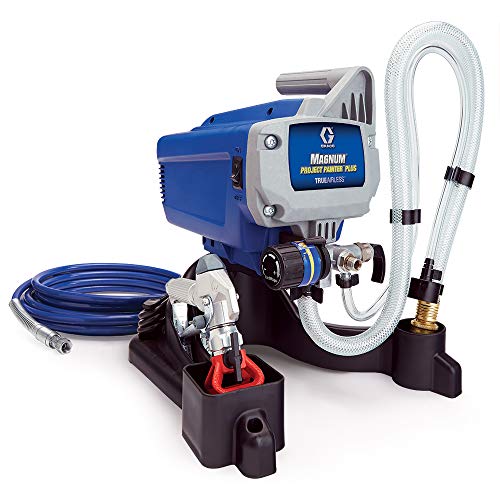
- ✓ Quick setup, solid feel
- ✓ Long hose, flexible suction
- ✓ Consistent spray quality
- ✕ Cleanup isn’t glamorous
- ✕ Heavier than basic sprayers
| Recommended Use | Projects up to 5 gallons per session |
| Pressure Control | Fully adjustable spray pressure |
| Material Compatibility | Unthinned paints and stains |
| Suction Configuration | Flexible suction tube for direct spray from 1-gallon or 5-gallon bucket |
| Hose Length Capability | Supports up to 50 ft of paint hose |
| Intended Use Audience | DIY/home improvement projects for walls and ceilings |
I’ve been putting the Graco Magnum 257025 Project Painter Plus Paint Sprayer through its paces, and it feels like a real workhorse for DIY wall and ceiling jobs. Right out of the box, it’s obvious this model is built for bigger tasks, handling projects up to 5 gallons with ease, which is perfect for tackling multiple rooms in a weekend. The first impression is that it’s sturdy enough to sit in the garage ready for the next project, not just a one-off tool.
One of the standout moments for me was the fully adjustable pressure control, which lets you dial in the perfect spray for either paints or stains without thinning. The flexible suction tube is a real game changer, letting you spray directly from a 1- or 5-gallon paint bucket, which means fewer trips to the trough and more continuous coverage on ceilings or tall walls. I also appreciated that the spray hose can reach up to 50 ft without a drop in performance, so I could work from a ladder or balcony without constantly repositioning the sprayer. When comparing different best paint sprayer for walls and ceiling options, this model stands out for its quality.
Using it felt smoother than expected, with evenly atomized paint that laid down a consistent coat on a master bedroom ceiling and the adjacent walls. The Project Painter Plus delivered a faster finish than rolling, especially on flat wall sections, and the setup was straightforward enough for a weekend warrior to handle without flaring up the fatigue. In the end, it’s clear this tool is designed for DIYers who want a quick, reliable alternative to brushes and rollers while covering multiple rooms in one go.
InoKraft MaXpray M1 Airless Paint Sprayer 3000 PSI 0.31 GPM

- ✓ Easy reach, flexible setup
- ✓ Smooth, even coverage
- ✓ Complete kit and support
- ✕ Not ultralight
- ✕ Not ideal for ultra-dense coatings
| Max Output | Up to 0.31 GPM |
| Operating Pressure | 3000 PSI |
| Spray Tip | Reversible AtoMax 515 carbide tip |
| Material Compatibility | Latex and acrylic coatings (unthinned) |
| Supply Method | Direct from 1- or 5-gallon container |
| Included Hose/Extensions | 25 ft hose + 12 in extension (supports up to 75 ft total hose) |
The moment I fired up the InoKraft MaXpray M1, the first thing that stood out was how the 360° swivel kept my wrist comfortable while I tackled a ceiling with stubborn texture. It felt like the gun glided through corners instead of getting hung up on ridges, which is a small but mighty win when you’re painting a whole room.
You can see the practical design in every detail, from the 25 ft hose to the 12 in extension that stretches your reach without tugging at you. I appreciated being able to pull from a standard 1- or 5-gallon container and still get a smooth, consistent spray.
The 3000 PSI output isn’t flashy, but it delivers fast coverage that doesn’t lap over the edges you care about.
Priming and pressure tweaks felt approachable thanks to the laminated Quick Start Guide and the included video tips. I didn’t need to hunt for manuals mid-project, which is a big plus when you’re trying to knock out a whole house.
The Flush-Ease valve made cleanup simpler—hook it to a garden hose and you’re not wrestling with full-pump disassembly after you’re done.
On ceilings and exterior siding, the 0.31 GPM output kept the paint moving without dumping too much at once, and the AtoMax 515 carbide tip gave steady, even coverage with latex and acrylics straight from the can. The kit is genuinely complete, with goggles, wrenches, and guides that feel like they were designed by someone who actually paints for a living.
If you’re weighing this for a big DIY project, you’re getting a solid setup that balances performance and user-friendliness. It won’t replace a pro rig, but for walls, ceilings, and decks, it’s a capable, reliable workhorse you won’t outgrow overnight.
1000W HVLP Paint Sprayer, Electric Spray Gun 1400ML

- ✓ Steady 1000W power
- ✓ Flexible spray patterns
- ✓ Easy cleanup design
- ✕ Limited by 1400ml tank
- ✕ Manual could be clearer
| Power | 1000 W |
| Spray Patterns | Horizontal, Vertical, and Circular |
| Nozzles | 4 copper nozzles included |
| Paint Cup Capacity | 1400 mL |
| Flow Control | Adjustable paint flow via flow knob |
| Included Accessories | Viscosity cup, filter funnels, protective gloves, cleaning brush, unclogging needle |
The moment I switched on the 1000W HVLP Sprayer, the spray felt calm and controlled right away. You can hear the motor settling into a smooth hum, not a jittery buzz that scares you from spraying.
That steady output makes walls, ceilings, and cabinets feel like you’re painting with precision, not fighting the tool.
The handle sits comfortably in your grip, and the trigger feels responsive without requiring extra pressure. I appreciated the quick-disconnect components that let me swap out the nozzle without a drama-filled struggle.
The 3 spray patterns—horizontal, vertical, and circular—make it easier to match the surface without awkward contortions.
Switching between nozzles is simple; the copper tips feel sturdy and give a clean, even mist. With the adjustable flow, you can dial in just enough paint for tight corners or wide swaths on a ceiling.
I found that fine-tuning helped reduce splatter and kept your paint waste reasonable, which is a huge win for bigger projects.
The 1400ml container is generous, and the kit includes a visitable set of extras—viscosity cup, filter funnels, gloves, cleaning brush, and an unclogging needle. After a project, a quick teardown and rinse is straightforward, thanks to the removable spray components.
Cleaning is not a headache, which makes you more likely to pick it up for the next room.
Real-world use felt approachable for both walls and ceilings, and even a tricky cabinet edge benefits from a precise, controlled spray. If you’re balancing time and coverage, this unit keeps your workflow flowing rather than stalling you with setup or cleanup.
All in all, you get reliable power, flexible patterns, and thoughtful accessories at a friendly price. It’s a practical choice for DIYers tackling indoor and outdoor projects alike.
HomeRight Super Finish Max HVLP Paint Sprayer — 3 Brass Tips
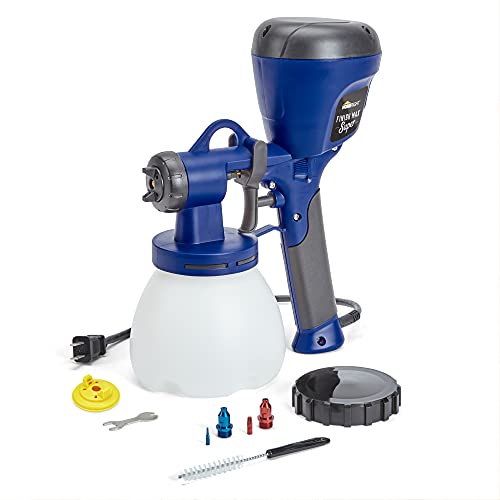
- ✓ Lightweight and comfortable
- ✓ Easy setup and clean
- ✓ Less thinning required
- ✕ Small cup capacity
- ✕ Moderate noise level
| Spray Technology | HVLP (High-Volume, Low-Pressure) spray system |
| Nozzle Tips | 3 brass tips included |
| Materials Compatibility | Suitable for painting walls, ceilings, fences, decks, furniture, cabinets, crafts (low-thinning required) |
| Usability/Setup | Fast setup with multiple spray settings and easy cleaning |
| Weight/Portability | Lightweight design with greater power than earlier models |
| Recommended Applications | Interior and exterior coatings for DIY projects |
I kept feeling the spray dial under my thumb and thinking, this is the one that finally makes DIY projects feel almost professional. With the HomeRight Super Finish Max, it starts up smoother than the older handheld sprayers I’ve tried, and you can see the advantage right away when you tilt for a ceiling coat.
The lightweight design is legit—you won’t get that arm-pump burn you get with heavier machines after a long session.
Setup is refreshingly quick. You’ll snap the cup on, pick a brass tip, and you’re off in minutes, not hours.
I especially appreciated how forgiving it is with thinning; you don’t have to chase microinches of viscosity before it flows evenly. That means less waste and fewer runs on walls, which is exactly what you want on a big room.
Handling feels balanced. The grip sits comfortably in your hand, and the spray pattern settings give you options without overthinking it.
I used it on walls and ceilings, then switched to furniture by dialing down the pressure—cleaning afterward was a breeze, too. The three brass tips give you flexibility, whether you’re aiming for a smooth cabinet finish or a broader wall coat.
Yes, it pumps out more power than the basic Finish Max, but it stays tame in your control. You’ll notice fewer drips on delicate surfaces, and that translates to evenings saved on touch-ups.
If you’re juggling multiple rooms or outdoor projects, you’ll value the consistency you get from start to finish.
Overall, this sprayer feels like a practical upgrade you’ll actually use. It tackles fences, decks, furniture, and ceilings with less thinning than you’d expect.
It’s the kind of tool that makes you say yes to more projects, not dread them.
What Advantages Does Using a Paint Sprayer for Walls and Ceilings Offer?
Versatility allows paint sprayers to handle a wide range of materials, from thin stains to thicker latex paints, making them suitable for various surfaces and project types, including both indoor and outdoor applications.
What Key Features Should You Consider When Choosing a Paint Sprayer for Walls and Ceilings?
When selecting the best paint sprayer for walls and ceilings, several key features are crucial to ensure efficiency and quality results.
- Type of Sprayer: Different types of paint sprayers, such as airless, HVLP (High Volume Low Pressure), and compressed air sprayers, have distinct advantages. Airless sprayers are ideal for large surfaces and provide a smooth finish quickly, while HVLP sprayers offer precision and are great for detailed work but may take longer for larger areas.
- Spray Pattern and Width: The ability to adjust the spray pattern and width is essential for achieving even coverage. Most sprayers allow you to switch between horizontal, vertical, and round patterns, which helps you adapt to various surfaces and corners effectively.
- Adjustable Pressure Settings: Having adjustable pressure settings lets you control the flow of paint, which can minimize overspray and improve control. This feature is particularly useful for different paint types and surfaces, allowing you to achieve the desired finish without wasting material.
- Tank Capacity: The size of the paint tank impacts how often you’ll need to stop and refill. A larger tank allows you to cover more area without interruptions, making it more efficient for larger walls and ceilings, while smaller tanks might be easier to manage for intricate work.
- Ease of Cleaning: Paint sprayers can become clogged if not cleaned properly, so consider models with easy disassembly and cleaning processes. Some sprayers come with a self-cleaning feature or can be rinsed out quickly, saving you time and effort after a painting project.
- Weight and Portability: The weight of the sprayer affects its ease of use, especially for overhead work on ceilings. Lightweight and portable designs help you maneuver the sprayer comfortably, reducing fatigue during long projects.
- Durability and Build Quality: Investing in a sprayer with a sturdy construction ensures it can withstand regular use and last through multiple projects. Look for models with durable materials that can handle different types of paint and solvents.
- Price and Warranty: Consider your budget while also evaluating the warranty and customer support offered. A higher initial investment may be worthwhile if it comes with a good warranty and reliable service, ensuring you have support if issues arise.
What Are the Different Types of Paint Sprayers Suitable for Walls and Ceilings?
The main types of paint sprayers suitable for walls and ceilings are:
- Airless Paint Sprayers: These sprayers use high pressure to atomize the paint, allowing for a smooth and even application over large areas.
- HVLP Paint Sprayers: High Volume Low Pressure (HVLP) sprayers provide a more controlled spray pattern, making them ideal for detailed work and reducing overspray.
- Compressed Air Sprayers: These traditional sprayers rely on compressed air to spray paint, offering a fine finish but typically requiring more setup and cleanup time.
- Graco Paint Sprayers: A well-known brand offering a variety of models, Graco sprayers are designed for efficiency and versatility, suitable for both professionals and DIY enthusiasts.
Airless Paint Sprayers: Airless paint sprayers are favored for their ability to cover large areas quickly without needing to dilute the paint. They are particularly effective for walls and ceilings because they produce a fine mist that adheres well, reducing the chances of drips and runs, making them ideal for both indoor and outdoor projects.
HVLP Paint Sprayers: HVLP sprayers use a turbine to generate a high volume of air at low pressure, which allows for precise control over the paint application. This type is especially useful for intricate designs and trim work, as it minimizes overspray and wastage, although it may take longer to cover large surfaces compared to airless models.
Compressed Air Sprayers: These sprayers operate by using an air compressor to atomize the paint, resulting in a smooth finish that is often preferred for fine detail work. However, they can be cumbersome due to the need for air hoses and compressors, and they typically require more time for setup and cleanup, making them less convenient for large wall and ceiling projects.
Graco Paint Sprayers: Graco offers a range of paint sprayers, including airless and HVLP models, known for their reliability and performance. These sprayers come with various features tailored for efficiency, such as adjustable pressure settings and easy cleaning mechanisms, making them suitable for both professionals and homeowners looking to achieve a quality finish on walls and ceilings.
How Does an Airless Paint Sprayer Operate for Optimal Results?
An airless paint sprayer operates by using high pressure to atomize paint, allowing for a smooth and even application on walls and ceilings.
- High-Pressure Pump: The core component of an airless paint sprayer, the high-pressure pump forces paint through a small nozzle at high speeds. This pressure is crucial as it enables the paint to break into fine droplets, providing a smooth finish without the need for air assistance.
- Nozzle Selection: The choice of nozzle size and type significantly impacts the spray pattern and coverage. A larger nozzle can cover more area quickly, while a smaller one allows for finer detail work, making it essential to select the appropriate nozzle for the specific project.
- Paint Viscosity: The thickness of the paint affects its ability to be sprayed effectively. Most airless sprayers can handle thicker paints, but it’s important to ensure the paint is adequately thinned when necessary to avoid clogging the nozzle and ensure a consistent spray.
- Distance and Angle: Maintaining the correct distance from the surface and the right spraying angle is vital for achieving an even coat. Typically, the sprayer should be held about 12 to 18 inches away from the surface, and the angle should be perpendicular to ensure proper coverage and avoid drips.
- Technique and Overlap: A consistent technique, including smooth, even strokes and appropriate overlap between passes, helps to minimize streaks and achieve uniform coverage. Overlapping each pass by about 30% ensures that no areas are missed and contributes to a balanced finish.
- Cleaning and Maintenance: Proper cleaning and maintenance of the sprayer are essential for optimal performance. After each use, it’s important to thoroughly clean the pump and nozzle to prevent paint buildup, which can affect the operation and longevity of the sprayer.
What Are the Unique Advantages of Using HVLP Paint Sprayers for Walls and Ceilings?
The unique advantages of using HVLP paint sprayers for walls and ceilings include efficiency, reduced overspray, and superior finish quality.
- Efficiency: HVLP (High Volume Low Pressure) paint sprayers deliver a high volume of paint at a lower pressure, allowing users to cover large areas quickly.
- Reduced Overspray: The low pressure of HVLP systems minimizes overspray, making it easier to control the application and resulting in less wasted paint.
- Superior Finish Quality: HVLP sprayers produce a fine mist that ensures an even coat and reduces the chances of drips and runs, leading to a professional-looking finish.
- Versatility: These sprayers can be used for various types of paint, including latex and oil-based paints, making them suitable for a range of projects.
- Less Clean-Up: HVLP sprayers often have fewer parts compared to traditional sprayers, which simplifies the cleaning process after use.
HVLP paint sprayers deliver a high volume of paint at a lower pressure, enabling users to efficiently cover large wall and ceiling areas in less time. This efficiency is particularly beneficial for larger projects, allowing for quicker completion without compromising quality.
The low pressure associated with HVLP systems significantly reduces overspray, which helps in controlling the application and minimizes paint waste. This feature is especially useful in interior spaces where maintaining a clean environment is crucial.
One of the standout qualities of HVLP sprayers is their ability to produce a superior finish. The fine mist they generate ensures an even coat, reducing the likelihood of drips and runs, which is essential for achieving that professional look on walls and ceilings.
These sprayers are also versatile, accommodating different types of paint, such as latex and oil-based options. This adaptability makes them suitable for a variety of projects beyond just walls and ceilings.
Lastly, HVLP sprayers typically have fewer components compared to traditional sprayers, which simplifies the clean-up process significantly. This means less time spent on maintenance and more time enjoying the results of your painting efforts.
What Are the Top Recommended Paint Sprayers for Walls and Ceilings?
The best paint sprayers for walls and ceilings offer efficiency, versatility, and quality finishes.
- Graco Magnum X5: This airless paint sprayer is ideal for both indoor and outdoor projects, capable of handling a wide variety of materials.
- Wagner Control Pro 150: A high-efficiency airless sprayer that provides a smooth finish while minimizing overspray, making it perfect for large surfaces.
- HomeRight Finish Max C800971: A budget-friendly option that uses HVLP technology, suitable for small to medium-sized projects with detailed work.
- Fuji Spray Mini-Mite 3: A versatile HVLP system that is highly portable and perfect for DIY enthusiasts looking for a professional-grade finish on walls and ceilings.
- DeVilbiss FinishLine 4: This sprayer is known for its precision and fluid control, making it ideal for achieving a flawless coat on ceilings and walls.
Graco Magnum X5: This airless paint sprayer is ideal for both indoor and outdoor projects, capable of handling a wide variety of materials. It features adjustable pressure and a flexible suction tube that allows you to spray directly from a paint bucket, providing convenience and efficiency for larger areas.
Wagner Control Pro 150: A high-efficiency airless sprayer that provides a smooth finish while minimizing overspray, making it perfect for large surfaces. Its innovative design allows for a more controlled spray pattern, which ensures you can cover walls and ceilings quickly while reducing cleanup time.
HomeRight Finish Max C800971: A budget-friendly option that uses HVLP technology, suitable for small to medium-sized projects with detailed work. This sprayer is lightweight and easy to maneuver, making it perfect for DIYers who need precision and control for intricate painting tasks.
Fuji Spray Mini-Mite 3: A versatile HVLP system that is highly portable and perfect for DIY enthusiasts looking for a professional-grade finish on walls and ceilings. Its adjustable fan pattern and fluid control allow for customization based on your project needs, ensuring an even application of paint.
DeVilbiss FinishLine 4: This sprayer is known for its precision and fluid control, making it ideal for achieving a flawless coat on ceilings and walls. It offers a wide range of nozzle sizes, which allows for different paint types and finishes, ensuring versatility for any painting project.
How Should You Properly Use a Paint Sprayer on Walls and Ceilings for Best Results?
To achieve the best results when using a paint sprayer on walls and ceilings, consider the following tips:
- Choose the right paint sprayer: Selecting the best paint sprayer for walls and ceilings is crucial for a smooth application. Airless sprayers are often recommended for large surfaces due to their ability to cover quickly and evenly, while HVLP (High Volume Low Pressure) sprayers are better suited for detailed work and smaller areas.
- Prepare the area: Proper preparation of the workspace is essential to avoid mess and ensure a professional finish. This includes moving furniture, laying down drop cloths, and using painter’s tape to mask off edges and protect areas that should not be painted.
- Thin the paint if necessary: Depending on the type of paint and sprayer being used, thinning the paint may be required to achieve the desired consistency for spraying. Always check the manufacturer’s guidelines for the correct thinning ratio to avoid clogging and achieve an even spray.
- Test the sprayer: Before starting on the main area, conduct a test spray on a piece of cardboard or an inconspicuous spot. This allows you to adjust the spray pattern and pressure settings, ensuring you achieve the right coverage and finish before applying it to the walls or ceiling.
- Use consistent motion: When applying paint, maintain a steady, consistent motion with the sprayer to avoid drips and uneven coverage. Move the sprayer in long, sweeping strokes, overlapping each pass by about 30%, and keep the nozzle at a consistent distance from the surface for uniform application.
- Clean the sprayer promptly: After finishing the job, it is vital to clean the sprayer immediately to prevent paint from drying inside the machine. Follow the manufacturer’s instructions for cleaning, which typically involves flushing the system with water or a solvent, ensuring that all components remain in good working order for future use.
What Maintenance Practices Ensure the Longevity of Your Paint Sprayer?
To ensure the longevity of your paint sprayer, consider the following maintenance practices:
- Regular Cleaning: After each use, thoroughly clean the paint sprayer to remove any leftover paint or debris.
- Inspection of Parts: Regularly check the sprayer’s components, such as the nozzle and filter, for wear and tear.
- Proper Storage: Store the paint sprayer in a dry, temperature-controlled environment to prevent damage from moisture or extreme temperatures.
- Use the Right Paint: Always use paint that is compatible with your sprayer to avoid clogging and other operational issues.
- Lubrication: Periodically lubricate moving parts as per the manufacturer’s guidelines to ensure smooth operation.
Regular cleaning is crucial as it prevents paint residue from hardening and clogging the sprayer, which can lead to malfunction. Using warm, soapy water for water-based paints or appropriate solvents for oil-based paints can keep the internal components functioning optimally.
Inspection of parts allows you to identify any signs of damage or wear before they lead to bigger issues. Pay special attention to the nozzle and filters, as these can significantly affect the sprayer’s performance if not maintained properly.
Proper storage of your paint sprayer ensures it is protected from environmental factors that can deteriorate its components. Keeping it in a controlled environment helps maintain the integrity of seals and other sensitive parts.
Using the right paint is essential, as incompatible formulations can cause clogging and other operational problems. Always consult the manufacturer’s recommendations for the types of paint suitable for your specific sprayer model.
Lubrication of moving parts is necessary to avoid friction and wear, which could lead to mechanical failures. Following the manufacturer’s guidelines ensures that you are using the correct type and amount of lubricant to keep your sprayer in top condition.
Related Post: