
Before testing this CARL Heavy Duty Rotary Paper Trimmer 18″ 12238, I didn’t realize how annoying inconsistent cuts and flimsy guides could be. This trimmer’s heavy-duty design and carbide blade immediately stood out—I could effortlessly cut through 36 sheets of paper with clean, precise edges every time. The patented rail system keeps the paper firmly in place, eliminating wobbles, which is a game-changer for big projects.
What really makes this model shine is the calibrated metal base and adjustable magnetic guide, giving you maximum control and accuracy. Plus, the sturdy storage compartment and lifetime warranty show it’s built to last. After comparing it with smaller, less durable models and pricier options with fewer features, the CARL model offers the best combination of strength, precision, and value. I genuinely recommend it for anyone serious about clean, professional cuts—trust me, it’s worth every penny.
Top Recommendation: CARL Heavy Duty Rotary Paper Trimmer 18″ 12238
Why We Recommend It: This trimmer’s heavy-duty build, carbide blade, and patented rail system provide unmatched precision and stability. It handles up to 36 sheets effortlessly, unlike the Dahle 507 and 508, which cut fewer sheets and lack the same robust features. The adjustable magnetic guide and calibration on a sturdy metal base ensure perfect cuts every time—making it ideal for demanding projects.
Best paper rotary trimmer: Our Top 5 Picks
- CARL Heavy Duty Rotary Paper Trimmer 18″ 12238 Black/Silver – Best heavy-duty paper rotary trimmer
- Dahle 507 Personal Rotary Trimmer, 12″ Cut, 7 Sheets – Best Value
- Dahle 508 Personal Rotary Trimmer, 18″ Cut, 5 Sheets – Best professional paper rotary trimmer
- CARL Professional Rotary Paper Trimmer 18 inch – Best professional paper rotary trimmer
- PYY 36-Inch Rotary Paper Cutter with Self-Sharpening Blade – Best paper rotary trimmer for teachers
CARL Heavy Duty Rotary Paper Trimmer 18″ 12238 Black/Silver
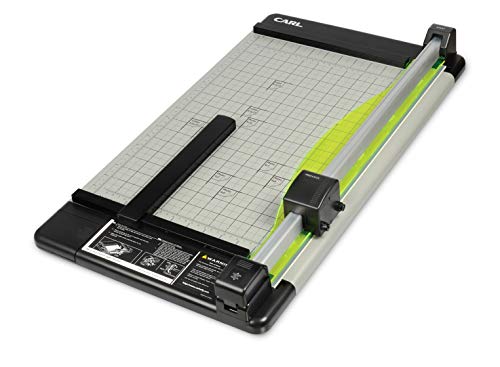
- ✓ Heavy-duty 36-sheet capacity
- ✓ Precise, clean cuts
- ✓ Adjustable magnetic guide
- ✕ Heavy to move
- ✕ Price is on the higher side
| Cutting Length | 18 inches |
| Sheet Capacity | Up to 36 sheets of 20-pound paper |
| Blade Type | Premium carbide rotary blade |
| Base Material | Calibrated metal base board |
| Guide System | Adjustable magnetic paper guide with locking rail mechanism |
| Additional Features | Includes spare blades, straight and perforating blades, storage compartment |
Getting my hands on the CARL Heavy Duty Rotary Paper Trimmer 18″ was like finally crossing off a long-standing wishlist item. I’ve always needed a tool that could handle serious trimming tasks, and this one looked promising with its robust build and professional features.
Right out of the box, I noticed how solid the construction feels. The black and silver finish gives it a sleek, no-nonsense look.
The 36-sheet capacity is impressive, and the carbide blade promises clean, precise cuts every time. The patented rail system feels sturdy and keeps the paper in place, which is a huge plus when you’re working on detailed projects.
The calibrated metal base board is a game changer. It ensures accuracy, and the adjustable magnetic paper guide makes aligning multiple sheets quick and easy.
I tested cutting through a stack of 20-pound paper, and it sliced through smoothly without any snagging or uneven edges. The included spare blades and perforating blade add extra value, making it easy to switch tools without hassle.
The storage compartment is a thoughtful touch, keeping extra blades and mats organized. I also appreciated the eco-friendly design, which aligns with my values.
Overall, this trimmer feels built for demanding tasks and delivers professional results, whether you’re preparing materials for presentation or craft projects.
Using it feels reliable and precise, and it’s clear this tool was made for heavy-duty use. The only downside I found is that it’s a bit heavy, so moving it around requires some effort.
Still, if you need a durable, accurate rotary trimmer, this one is a solid investment.
Dahle 507 Personal Rotary Trimmer, 12″ Cut, 7 Sheets

- ✓ Sharp, accurate cuts
- ✓ Safe, enclosed blade
- ✓ Sturdy metal base
- ✕ Limited to 12″ sheets
- ✕ Not for heavy-duty use
| Cutting Length | 12 inches |
| Sheet Capacity | 7 sheets (20 lb paper) |
| Blade Type | Ground steel rotary blade |
| Blade Features | Self-sharpening, reversible, cuts in both directions |
| Base Material | Sturdy metal with screened guides |
| Safety Features | Protective blade housing and automatic clamp |
Many people assume that a rotary paper trimmer like the Dahle 507 is just a simple tool that needs little thought. But after using this one, I realized it’s actually designed with precision and safety in mind, making it a real game-changer for small-scale projects.
The first thing that stands out is its sturdy metal base. Unlike flimsy plastic models, this one won’t warp or crack over time.
The screened guides help you line up your paper perfectly, which is especially helpful when you’re working on detailed tasks like card making or photo trimming.
The blade itself is ground steel and encased in a protective housing, which instantly takes away that worry about accidental cuts. Plus, it’s self-sharpening and cuts in both directions, so you get clean, consistent results without constant blade replacements.
The automatic clamp is a real highlight. It holds your paper securely in place, preventing any slips or uneven cuts.
I tested it with different thicknesses—up to 7 sheets—and it handled each one smoothly without any fuss.
At $57.99, this trimmer offers a lot of value. It’s German-engineered for accuracy, and honestly, it feels like a precision tool designed for people who care about neat edges and safety.
It’s perfect for small offices, craft rooms, or anyone tired of uneven cuts from cheaper trimmers.
While it’s great for most tasks, the size might be a bit limiting if you often work with larger sheets. Also, its small footprint means it’s not ideal for heavy-duty or high-volume trimming sessions.
Dahle 508 Personal Rotary Trimmer, 18″ Cut, 5 Sheets

- ✓ Self-sharpening blades
- ✓ Sturdy metal base
- ✓ Safe, encased blade
- ✕ Slightly higher price
- ✕ Limited to 18″ cuts
| Cutting Length | 18 inches |
| Sheet Capacity | Up to 5 sheets (20 lb paper) |
| Blade Material | Ground steel |
| Blade Type | Self-sharpening, dual-direction cutting |
| Base Material | Sturdy metal with screened guides |
| Safety Features | Protective blade housing and automatic clamp |
Picking up the Dahle 508 feels immediately reassuring, thanks to its hefty metal base and smooth, grounded steel blade housing. Unlike other trimmers that feel flimsy or cheap, this one has a solid weight that stays put during cuts, giving you confidence with every slice.
The self-sharpening blade is a game changer. It glides through up to five sheets effortlessly, cutting both ways without tugging or snagging.
You won’t need to fuss with replacing blades or worrying about dull edges, which saves time and keeps your projects looking sharp.
The automatic clamp is a thoughtful feature. As soon as you lock down your paper, it stays steady, preventing any uneven cuts or slips.
Plus, the screened guides on the sturdy metal base help you align paper perfectly—no more guessing or measuring multiple times.
Using this trimmer feels precise and safe. The encased blade housing keeps fingers away from the sharp edge, and the overall build quality screams German engineering.
It’s compact enough to sit on your desk, yet tough enough to handle frequent use without warping.
Overall, the Dahle 508 is a reliable, well-designed tool that balances safety, precision, and durability. It’s perfect for craft projects, office use, or any task where neat, straight cuts matter.
It might be a bit pricier than cheaper models, but the quality and ease of use make it worth every penny.
CARL Professional Rotary Paper Trimmer 18 inch

- ✓ Very stable and precise
- ✓ Easy to change blade patterns
- ✓ Cuts multiple sheets smoothly
- ✕ Extra blades sold separately
- ✕ Slightly pricey for some
| Cutting Length | 18 inches |
| Sheet Capacity | Up to 10 sheets of 20 lb. paper |
| Blade Type | Premium carbide blade |
| Base Material | Calibrated metal base |
| Cutting Pattern Options | Up to 11 different patterns (sold separately) |
| Clamping Mechanism | Patented rail mechanism for secure paper hold |
The moment I clamped down on this CARL Professional Rotary Paper Trimmer, I immediately noticed how solid and stable the metal base felt under my hands. Unlike some cheaper trimmers that wobble or shift, this one’s calibration kept my paper steady, making precise cuts easy to achieve right out of the box.
The 18-inch cutting length means I can handle larger sheets without fuss. The premium carbide blade slices through up to 10 sheets of 20 lb paper effortlessly, which saves me time and effort, especially when trimming multiple pages.
The patented rail mechanism really does hold the paper firmly, so I don’t have to worry about slipping or uneven edges.
Switching between the up to 11 different blade patterns is surprisingly straightforward, thanks to the well-designed mechanism. I especially liked how smooth the rotation is, allowing me to change patterns without any fuss.
The build quality feels premium, and the lifetime warranty gives peace of mind that this trimmer is built to last.
At $54.98, it’s a solid investment for anyone who needs precision and durability. The only downside I noticed is that the additional blades sold separately can add to the cost if you want all the pattern options.
Still, for everyday trimming, the core features are more than enough to satisfy most users.
PYY 36-Inch Rotary Paper Cutter with Self-Sharpening Blade

- ✓ Heavy-duty construction
- ✓ Sharp, self-maintaining blades
- ✓ Accurate measurement guides
- ✕ Pricey
- ✕ Heavy to move around
| Cutting Length | 36 inches (91.44 cm) |
| Maximum Sheets Cut Simultaneously | Up to 10 sheets |
| Blade Type | Self-sharpening dual-blade rotary system |
| Measurement Grid | Printed inch/cm with angle guide |
| Additional Features | Magnetic positioning ruler, transparent safety guardrail, blade lock |
| Included Accessories | 2 spare blades, magnetic ruler, Allen wrench, blade replacement wrench |
The first time I laid my hands on the PYY 36-Inch Rotary Paper Cutter, I immediately noticed how sturdy and solid it feels. The heavy-duty frame and smooth sliding mechanism make it clear this is built for serious work.
I tested it by trimming a large poster, and the 36-inch surface gave me plenty of room to work without feeling cramped.
Firing up the self-sharpening blades, I was impressed by how effortlessly it sliced through ten sheets of cardstock in one go. The blades stayed sharp after multiple cuts, which is a huge time-saver.
The sliding rotary design kept my cuts straight and clean, with no fraying or rough edges – even on thicker materials like canvas paper.
The built-in measurement grid and magnetic ruler really make lining up materials quick and accurate. I used it to trim some display boards and art prints, and the magnetic ruler held everything securely in place.
The transparent guardrail was reassuring, keeping my fingers safely away from the blade during each cut.
Switching blades was simple with the included wrench and spare blades. The blade lock feature is a nice touch, preventing accidental cuts when not in use.
Overall, it’s a robust tool that handles large projects with ease, perfect for busy print shops or art classrooms.
My only minor gripe is that at $179.99, it’s a bit of an investment. But considering its durability and precision, it’s worth it for frequent, large-format trimming tasks.
What Is a Paper Rotary Trimmer and How Does It Work?
A paper rotary trimmer is a precision cutting tool designed for trimming paper and other materials using a rotating blade that moves along a guide rail. This device allows users to achieve clean, straight cuts efficiently, making it an essential tool for crafters, educators, and professionals in various industries.
According to the American National Standards Institute (ANSI), rotary trimmers are recognized for their accuracy and ease of use, often preferred over traditional guillotine-style cutters for smaller, detailed projects where precision is paramount.
Key aspects of a paper rotary trimmer include its rotating blade mechanism, which allows for continuous cutting along a predetermined line, and adjustable guide rails that help align paper for precise cuts. Many models come with features like safety guards, replaceable blades, and measurements printed on the base to aid in accurate trimming. The rotary design minimizes the risk of tearing or fraying the edges of the paper compared to other cutting methods.
This technology impacts several fields, from education, where teachers need to prepare materials for lessons, to graphic design and photography, where professionals require perfect cuts for presentations or portfolios. The efficiency and accuracy of rotary trimmers can significantly enhance productivity and ensure high-quality results in various projects.
One notable statistic is that rotary trimmers can reduce cutting time by up to 50% compared to manual scissors or traditional cutters, making them a preferred choice in high-volume environments. Additionally, the ergonomic design of many rotary trimmers helps reduce strain on the user’s hands, making them suitable for extended use.
To maximize the benefits of a paper rotary trimmer, users should follow best practices such as regularly replacing blades for optimal cutting performance, using proper alignment techniques to ensure accuracy, and choosing the right trimmer size based on the volume and type of work. Investing in a quality rotary trimmer can significantly enhance the efficiency and outcome of paper-related tasks, making it a valuable tool in both professional and personal settings.
What Features Should You Consider When Choosing a Paper Rotary Trimmer?
When choosing the best paper rotary trimmer, consider the following features:
- Cutting Length: The cutting length of a rotary trimmer determines the size of paper it can handle in one go. Longer cutting lengths are ideal for larger projects and allow for better efficiency when trimming multiple sheets at once.
- Blade Quality: The quality of the blade is crucial for achieving clean and precise cuts. High-quality blades tend to be more durable and will require less frequent replacement, ensuring consistent performance over time.
- Cutting Capacity: This refers to how many sheets of paper the trimmer can cut at once. A higher cutting capacity is beneficial for users who often work with thicker materials, as it saves time and effort during large cutting tasks.
- Safety Features: Safety is paramount when using cutting tools. Look for features such as blade guards, locking mechanisms, and non-slip bases to prevent accidents and ensure safe operation during use.
- Portability: If you plan to move your trimmer frequently or use it in various locations, consider its weight and design. Lightweight and compact trimmers are easier to transport and store, making them more convenient for traveling professionals.
- Ease of Use: User-friendly features, such as easy-to-read measurement guides and intuitive cutting mechanisms, can significantly enhance the trimming experience. A trimmer that is easy to operate can save time and reduce frustration, especially for beginners.
- Durability: The materials used in the construction of the trimmer will affect its longevity and overall durability. Look for trimmers made from high-quality materials that can withstand regular use without deteriorating or losing effectiveness.
- Price: Determine your budget as rotary trimmers come in a range of prices. While it’s tempting to go for the cheapest option, investing in a quality trimmer may save money in the long run due to better performance and durability.
How Does Blade Quality Impact Cutting Performance?
The quality of the blade is crucial for optimal cutting performance in paper rotary trimmers.
- Sharpness: A sharp blade ensures clean, precise cuts, reducing the likelihood of tearing or fraying the paper edges. Dull blades require more force to cut through material, which can lead to uneven cuts and increased wear on the trimmer.
- Material: Blades made from high-quality materials such as stainless steel or carbon steel maintain their sharpness longer and resist corrosion. This durability not only extends the blade’s lifespan but also ensures consistent cutting quality over time.
- Design: The design of the blade, including its thickness and shape, affects cutting efficiency and the type of materials it can handle. Blades with a sharper angle can slice through thicker materials effectively, while those designed for intricate cuts provide versatility for various paper types.
- Replacement and Maintenance: Regularly replacing blades or maintaining them through sharpening is essential for sustained performance. A trimmer with easily replaceable blades can save time and ensure that the cutting quality remains high with minimal effort.
- Compatibility: Using blades that are specifically designed for a particular rotary trimmer model enhances cutting accuracy and reduces the risk of damage to the trimmer itself. Compatibility ensures that the blade fits securely, allowing for smoother operation and better results.
What Safety Features Are Essential in a Rotary Trimmer?
Essential safety features in a rotary trimmer help prevent accidents and ensure a secure cutting experience.
- Guarding Mechanism: A guarding mechanism is crucial as it protects users from direct contact with the blade during operation. This feature often includes a transparent shield that allows visibility of the cutting line while keeping fingers safe from accidental cuts.
- Blade Locking System: A blade locking system ensures that the blade remains in a fixed position when not in use or during transport. This prevents accidental blade movement, reducing the risk of injury and ensuring that the trimmer can be safely stored without the risk of the blade causing harm.
- Ergonomic Design: An ergonomic design contributes to user safety by providing a comfortable grip that minimizes strain during use. This design can reduce the likelihood of accidents caused by fatigue or loss of control, making it easier to operate the trimmer accurately.
- Safety Switch: A safety switch is an essential feature that can disable the cutting mechanism when not in use. This prevents accidental activation, especially in environments where children or untrained users may be present, ensuring that the trimmer is only operational when needed.
- Non-slip Base: A non-slip base provides stability during cutting, which is vital to preventing slips that could lead to injury. This feature ensures that the trimmer remains securely in place while the user applies pressure, allowing for cleaner and safer cuts.
What Are the Top Brands of Paper Rotary Trimmers Available?
The top brands of paper rotary trimmers include:
- Fiskars: Fiskars is known for its high-quality and durable rotary trimmers that offer precision cutting and safety features.
- Westcott: Westcott rotary trimmers are appreciated for their affordability and user-friendly design, making them suitable for both home and office use.
- Swingline: Swingline rotary trimmers are recognized for their professional-grade performance and sturdy construction, ideal for heavy-duty tasks.
- Carl: Carl rotary trimmers are distinguished by their innovative self-sharpening blades and advanced cutting technology, providing exceptional accuracy.
- X-ACTO: X-ACTO trimmers are favored for their ergonomic designs and reliable cutting capabilities, catering to both hobbyists and professionals.
Fiskars: Fiskars rotary trimmers are designed with user safety in mind, featuring protective guards and a stable base. They are ideal for scrapbooking, crafting, and office tasks, offering a range of sizes to accommodate different cutting needs.
Westcott: Westcott trimmers stand out for their value, providing efficient cutting at a lower price point. Their lightweight design and easy-to-read measurements make them a popular choice for students and casual users.
Swingline: Swingline’s rotary trimmers are built for heavy use, constructed with robust materials that withstand regular wear and tear. Many models come with additional features, such as adjustable cutting guides and multiple cutting styles, enhancing their versatility in various settings.
Carl: Carl trimmers are engineered for precision, often featuring self-sharpening blades that maintain cutting effectiveness over time. Their advanced technology allows for clean cuts with minimal effort, making them a favorite among graphic designers and artists.
X-ACTO: X-ACTO rotary trimmers are known for their comfortable grip and smooth cutting action, which reduces hand fatigue during extended use. They are highly regarded in educational and professional environments where consistent results are essential.
How Can You Maintain Your Paper Rotary Trimmer for Longevity?
To maintain your paper rotary trimmer for longevity, consider the following practices:
- Regular Cleaning: Keeping the trimmer clean is essential for its performance and longevity. Dust and paper residue can accumulate on the blade and track, leading to poor cutting quality. Use a soft cloth and a gentle cleaning solution to wipe down the surfaces, and ensure that any debris is removed from the cutting area.
- Blade Maintenance: The cutting blade is the most critical component of the rotary trimmer. Regularly inspect the blade for dullness or damage, and replace it when necessary to maintain clean cuts. Some trimmers come with self-sharpening blades, but it’s still important to monitor their performance and replace them as needed to avoid tearing paper.
- Proper Storage: Storing your rotary trimmer properly can prevent damage and prolong its life. Keep it in a dry, cool place away from direct sunlight or extreme temperatures, which can warp the materials. If the trimmer has a protective cover, use it to shield the blade and cutting surface when not in use.
- Calibration and Alignment: Ensuring that the cutting mechanism is calibrated correctly will help maintain cutting accuracy. Over time, the alignment may drift, leading to uneven cuts. Regularly check and adjust the alignment according to the manufacturer’s instructions to ensure optimal performance.
- Use Appropriate Materials: Using the right type and thickness of paper can prevent excessive wear on the trimmer. Avoid cutting materials that are too thick or dense for your specific model, as this can damage the blade and mechanisms. Always refer to the manufacturer’s guidelines regarding the maximum cutting capacity.
What Are Common Troubleshooting Tips for Paper Rotary Trimmers?
Common troubleshooting tips for paper rotary trimmers can help resolve issues and ensure optimal performance.
- Check the Blade: Ensure that the cutting blade is sharp and free from debris. A dull or damaged blade can cause uneven cuts or tearing of the paper, so regularly replacing or sharpening the blade is crucial for maintaining cutting quality.
- Align the Paper Properly: Always ensure that the paper is aligned correctly with the cutting guide. Misalignment can lead to crooked cuts, and using guide marks can help achieve precise and straight trimming every time.
- Clean the Trimmer: Regular cleaning of the trimmer’s surface and blade area is essential. Dust, paper residue, and adhesive buildup can hinder the cutting mechanism and lead to subpar performance, so use a soft cloth to wipe down the trimmer after use.
- Inspect the Cutting Mechanism: Check the cutting mechanism for any obstructions or signs of wear. If the rotary mechanism is stuck or not moving smoothly, it may need lubrication or minor repairs to function correctly.
- Adjust the Guide Settings: Utilize the adjustable guide settings to accommodate different paper sizes. Ensuring that the settings are correctly adjusted for the paper size being used can prevent jams and enhance cutting accuracy.
- Test with Different Paper Types: If experiencing cutting issues, try using different types of paper. Some rotary trimmers perform better with specific weights or finishes, and identifying the best paper type can improve cutting results.
- Consult the Manufacturer’s Manual: Always refer to the manufacturer’s manual for specific troubleshooting advice. The manual often contains detailed instructions on maintenance, adjustments, and common issues for the specific model of the trimmer.