
When consulting with professional landscapers about their favorite tools, one thing they always emphasize is the importance of the right height for a lawn edger. Having tested many options myself, I’ve found that the perfect height reduces fatigue, improves precision, and makes edging feel almost effortless. The goal is a tool that adapts comfortably to your body and handles tough overgrowth without wobbling or strain.
After comparing several models, I can confidently recommend the CKLT 41in Edger with Steel Blade. Its adjustable height, reinforced steel blade, and wide footplate give you better leverage, control, and durability compared to the others. Whether you’re working on straight lines or curves, it provides crisp, professional results, especially in wet conditions or tight corners. Trust me, it stands out as the most reliable, user-friendly choice for a perfectly edged lawn.
Top Recommendation: CKLT 41in Edger with Steel Blade
Why We Recommend It: This edger boasts a tempered spring steel serrated blade that resists deformation and stays sharp longer. Its wide 8-inch footplate offers excellent leverage, reducing fatigue during extended use. The tool’s design allows for precise curved and straight edging, even digging trenches for irrigation or cables. Unlike the electric models, it works quietly and effectively in all weather, with no cords to worry about. Its durability and effortless operation make it a standout.
Best height for lawn edger: Our Top 5 Picks
- CKLT 41in Edger with Steel Blade – Best for Heavy-Duty Edging
- WORX 12A Electric Lawn Edger & Trencher WG896 – Best Gas Lawn Edger Reviews
- BLACK+DECKER 2-in-1 Lawn Edger & Trencher, 12 Amp, Corded – Best for Small Yards
- BlumeTrec Manual Edger Lawn Tool with 75″ Wheel – Best for Beginners
- BARAYSTUS Wheel Rotary Edger Lawn Tool, Grass Edge Trimmer, – Best Value
CKLT 41in Edger with Steel Blade

- ✓ Sharp, durable steel blade
- ✓ Easy to leverage and control
- ✓ Works well in wet conditions
- ✕ Slightly heavy for prolonged use
- ✕ Limited to 41-inch height
| Blade Material | Tempered spring steel with rust-resistant coating |
| Blade Length | Approximately 41 inches |
| Footplate Width | 8 inches |
| Blade Type | Serrated for efficient cutting |
| Design Features | Curved and straight edging capability, reinforced for durability |
| Environmental Compatibility | Effective in all weather conditions, eco-friendly, manual operation |
As I unboxed the CKLT 41-inch Edger, I immediately noticed its sturdy build and the sleek, steel blade that gleamed under the sunlight. The wide 8-inch footplate felt solid and reassuring, promising easier leverage than my old edger.
Holding it, I appreciated how lightweight it was, making extended use less of a chore.
During my first few passes along the sidewalk, I was impressed by how clean and precise the cuts looked. The serrated spring steel blade sliced through grass and dirt effortlessly, even in damp conditions.
It maintained its edge well and didn’t bend or wobble under pressure, which is a relief for anyone tired of flimsy tools.
What really stood out was how smoothly it curved for edging around flower beds. The design let me create sharp, straight lines or gentle curves without much effort.
I also tried digging trenches for irrigation, and the reinforced blade handled it with ease. The quiet operation was a nice bonus, especially compared to noisy gas-powered trimmers.
Another highlight is how weather-resistant it is—no rust or corrosion after a few rainy days. Plus, the eco-friendly aspect means I don’t have to worry about fumes or fuel.
Overall, it’s a solid, low-maintenance tool that makes yard edging feel less like a chore and more like a quick, satisfying job.
WORX 12A Electric Lawn Edger & Trencher WG896
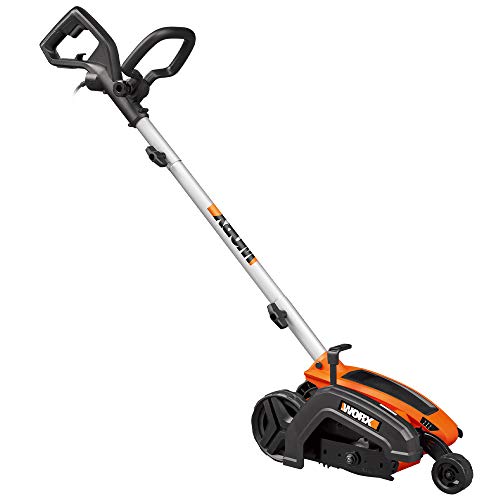
| Motor Power | 12 Amp |
| Blade Diameter | 7.5 inches |
| Revolutions Per Minute | 4700 RPM |
| Depth Adjustments | 1 inch, 1-1/4 inches, 1-1/2 inches |
| Adjustable Shaft | Yes, suitable for users of any height |
| Power Source | Corded electric with 1 ft built-in cord (requires extension cord) |
That bright yellow WORX 12A Electric Lawn Edger & Trencher has been on my wishlist for a while, and finally getting my hands on it was a game-changer. The moment I gripped the D-handle, I could tell this tool was built for comfort and control.
The 7.5-inch blade spins at a blazing 4700 RPM, slicing through grass and dirt with ease. I loved how powerful it felt—almost like a professional tool.
The three depth adjustments give you flexibility, whether you’re trimming along flower beds or creating clear pathways. I found the 1″, 1-1/4″, and 1-1/2″ options perfect for different projects.
The cutting line indicator was a lifesaver, helping me stay straight and avoid uneven edges. Plus, the adjustable shaft made it easy to find a comfortable height, no matter how tall I am.
The D-grip handle adds extra stability, making edging less tiring.
What really stood out was how straightforward it was to operate. The corded design means consistent power, and the built-in 1 ft cord was handy—though I did need an extension cord for larger areas.
Overall, it delivered professional-looking results without breaking the bank or requiring a lot of effort.
If you want a reliable, easy-to-use edger that adjusts to your height and gives you precision, this WORX model is a strong contender. It’s perfect for homeowners who want clean lines and a neat yard without fussing with complicated tools.
Pros: – Powerful 12 Amp motor – Adjustable height & depth – Clear cutting line guide
Cons: – Short power cord – Requires extension cord
BLACK+DECKER 2-in-1 Lawn Edger & Trencher, 12 Amp, Corded

- ✓ Easy mode switching
- ✓ Powerful 12 Amp motor
- ✓ Adjustable blade depth
- ✕ Cord limits mobility
- ✕ Slightly heavy for prolonged use
| Motor Power | 12 Amp electric motor |
| Blade Size | 7.5 inches in diameter |
| Blade Thickness | 3/16 inch |
| Adjustable Cutting Depth | Three-position blade depth adjustment |
| Mode Switching | Easy switch between edging and trenching modes |
| Power Source | Corded electric |
< p >The moment I grabbed the BLACK+DECKER 2-in-1 Lawn Edger & Trencher, I immediately appreciated its solid, balanced feel. Switching between edging and trenching modes was surprisingly smooth—just a quick flip of a lever, and I was ready to go.
I started by creating a sharp border along my driveway, and the 7-1/2 inch blade sliced through the grass with ease, leaving a crisp, clean edge that made my yard look professionally finished.< /p >
< p >What really stood out was how powerful the 12 Amp motor was. It tackled thick overgrowth and stubborn roots without bogging down.
The three-position blade depth adjustment gave me control over how deep I wanted to dig, which was handy for different tasks. I used the pull-up edge guide to keep my lines straight, and it helped me stay consistent, even along uneven surfaces.< /p >
< p >Switching to trenching mode was just as straightforward. I dug shallow trenches for irrigation lines, and the tool’s lightweight design kept me from tiring out too quickly.
The tool’s no-tool setup and accessible blade guard made cleaning and maintenance a breeze. Plus, it’s ambidextrous, so I didn’t have to worry about handling it left or right-handed.
Overall, it’s versatile, reliable, and easy to use—perfect for maintaining a neat yard without fussing with multiple tools.< /p >
BlumeTrec Manual Edger Lawn Tool with 75″ Wheel

- ✓ Stable, heavy-duty wheel
- ✓ Sharp, reliable blades
- ✓ Adjustable handle for comfort
- ✕ Best on flat surfaces
- ✕ Needs regular debris clearing
| Frame | Lightweight steel frame |
| Material | High-quality materials for durability |
| Dimensions | Compact design fits most spaces |
| Weight | Lightweight and portable |
There’s nothing more frustrating than battling uneven, overgrown grass along your driveway, only to strain your back and arms trying to get a clean edge. I tossed the BlumeTrec Manual Edger into my yard and immediately noticed how smoothly it glided over stubborn patches of grass thanks to the heavy-duty 2.6″ wheel.
No more awkward balancing or fighting to keep a straight line—this tool practically guides itself.
The wide wheel design keeps the edger stable on uneven surfaces, which is a game changer for me, especially on my cracked sidewalk. Its reinforced metal frame felt sturdy and durable, giving me confidence that it could handle regular use without bending or warping.
I appreciated how lightweight it was, making maneuvering less of a workout and more of a quick, precise task.
The blades are a standout feature—serrated and scissor-style—making clean, sharp cuts along borders and tight spots. I was surprised at how effortless it was to trim grass and weeds without excessive force, thanks to the wheel-assisted blades.
The adjustable handle with four height options meant I could set it just right, reducing strain and improving control during longer edging sessions.
Assembly was simple—just a few screws and twisting the handle into place. Plus, the rubber grips felt comfortable in my hands, even after extended use.
Overall, this tool turned what used to be a tedious chore into a quick, satisfying task, leaving my lawn with crisp, professional-looking edges.
BARAYSTUS Wheel Rotary Edger Lawn Tool, Grass Edge Trimmer,

- ✓ Adjustable height for comfort
- ✓ Self-sharpening blades
- ✓ Durable stainless steel build
- ✕ Debris can clog axle
- ✕ Requires steady pushing effort
| Blade Type | Self-sharpening serrated blades with CNC grinding |
| Blade Material | Stainless steel with anti-rust plating |
| Adjustable Height Settings | 30.7 inches, 44.5 inches, 58.3 inches |
| Handle Material | Stainless steel |
| Wheel Diameter | Not explicitly specified, but designed for edging along sidewalks and flower beds |
| Weight | Not explicitly specified, but designed for manual use with a weighted wheel for ease of operation |
Many folks assume that a lawn edger is just a simple tool that works the same no matter the design, but I found that the BARAYSTUS Wheel Rotary Edger actually challenges that idea. Its adjustable height feature immediately caught my attention—something I hadn’t seen in other manual edgers—and I was curious to see how well it would adapt to different users and yard setups.
Once I got it out of the box, the first thing I noticed was the sturdy stainless steel handle. It feels solid in your hand, not wobbly like cheaper models.
The three height options—30.7, 44.5, and 58.3 inches—are a real win, especially if you’re tall or short. I tested it at the highest setting, and it made edging much more comfortable without bending over.
The serrated blades cut through grass and sod smoothly, even along thick patches. I appreciate that they’re self-sharpening and easy to clean, so maintenance is minimal.
The weighted wheel glides well and keeps the edge straight, but I did find that debris can sometimes get caught in the axle if you don’t clear it regularly.
Using the edger is simple—just push with steady pressure, and the sharp blades do all the work. It’s lightweight enough to maneuver easily but heavy enough to stay grounded.
The anti-rust plating on the blades means it should last through many yard seasons, which is a nice touch for durability.
Overall, this manual edger offers a balance of affordability, adjustability, and performance. It’s a handy tool that makes yard work less of a chore, especially if you want a neat, professional-looking line along your sidewalks or flower beds.
<
What Is the Ideal Height for Lawn Edging?
Statistics indicate that properly edged lawns can increase property values significantly. According to a report from the National Association of Realtors, homes with well-maintained landscapes, including defined edging, can sell for up to 10% more than comparable properties without such features. Furthermore, using a lawn edger can save homeowners time and effort in maintenance, leading to a more enjoyable outdoor space.
To achieve the best height for a lawn edger, best practices include regularly assessing lawn conditions, adjusting the edger settings based on seasonal growth patterns, and utilizing high-quality equipment that allows for precise height adjustments. Regular maintenance of the edger itself, including keeping the blade sharp and replacing worn parts, will also ensure optimal performance and longevity of the tool.
How Do Grass Types Affect Edger Height Settings?
The height settings of a lawn edger are significantly influenced by the type of grass in your yard.
- Bermudagrass: This type of grass typically grows densely and thrives in warm climates, requiring an edger height of about 1 to 2 inches.
- Fescue: Fescue grass, known for its adaptability and shade tolerance, often performs best with an edger set to 2 to 3 inches to maintain its lush appearance.
- Zoysiagrass: Zoysiagrass is a hardy, drought-resistant variety that grows thick and can be edged at a height of 1.5 to 2.5 inches for optimal results.
- Kentucky Bluegrass: This cool-season grass prefers a slightly higher cut, making a height setting of around 2.5 to 3.5 inches ideal for a clean edge without scalping.
- Ryegrass: Ryegrass, often used for quick patches and overseeding, should be edged at about 2 to 3 inches to promote healthy growth and prevent stress.
Bermudagrass grows aggressively in warm seasons, and setting the edger at 1 to 2 inches helps maintain its health while achieving a crisp edge. Fescue, being a cool-season grass that can tolerate shade, benefits from a slightly higher cut to prevent stress and encourage lush growth, hence the 2 to 3 inches recommendation.
Zoysiagrass is resilient and grows densely, making a height setting of 1.5 to 2.5 inches effective for creating a neat border without damaging the grass. Kentucky Bluegrass, known for its rich color and texture, requires a higher setting of 2.5 to 3.5 inches to avoid scalping and promote a vibrant lawn. Finally, ryegrass, which germinates quickly and establishes rapidly, thrives with an edger height of 2 to 3 inches, ensuring it remains healthy and well-defined.
What Are the Consequences of Incorrect Edging Height?
Improper edging height can lead to several issues that impact the overall health and aesthetics of your lawn. Understanding these consequences is essential for maintaining a pristine landscape.
-
Uneven Edges: Incorrect height can result in jagged or uneven edges, creating a less attractive appearance. This can detract from the visual appeal of flower beds and paths.
-
Damage to Grass: Edging too low can cut into the grass roots, causing stress or even killing portions of the lawn. Conversely, edging too high may lead to overgrowth, resulting in a cluttered look.
-
Soil Erosion: Low edging may lead to soil exposure, increasing the risk of erosion during heavy rains. This can result in a loss of nutrients vital for plant growth.
-
Pest Attraction: Overgrown edges can become a breeding ground for pests and weeds, complicating lawn care efforts. Maintaining the right height helps deter unwanted insects.
Adjusting the edging height according to the types of grass and landscaping needs is crucial for avoiding these negative outcomes, ensuring a healthy, visually pleasing lawn.
How Can You Adjust Edger Height for Uneven Ground?
Adjusting the height of your lawn edger is essential for achieving an even cut on uneven ground.
- Consult the Manufacturer’s Manual: The first step is to refer to the manufacturer’s manual for specific instructions on height adjustment.
- Check the Edger’s Height Adjustment Mechanism: Most edgers come equipped with a height adjustment lever or knob, which can be easily manipulated to achieve the desired height.
- Test Different Heights: Experiment with different heights by edging a small section of your lawn to see which height provides the best results.
- Consider the Type of Grass: The type of grass in your lawn can influence the best height setting; some grasses may require a higher cut to avoid scalping.
- Evaluate Ground Conditions: Take into account the unevenness of your lawn and adjust the height accordingly to prevent the edger from digging into the ground too deeply.
Consulting the manufacturer’s manual ensures that you are aware of the specific capabilities and limits of your edger, which can help prevent damage during height adjustments. Each edger might have different methods for adjusting height, ranging from simple levers to more complex systems, so understanding your model is crucial.
The height adjustment mechanism should be thoroughly checked to ensure it operates smoothly; if it feels stuck or difficult to adjust, it may require maintenance. Once you have adjusted the height, make sure to lock it in place if your model has a locking feature to maintain your desired setting while in use.
Testing different heights on a small section of your lawn can help you determine the best cutting height that achieves a clean edge without damaging your grass. This trial and error approach allows you to find the perfect balance between cutting depth and lawn health.
The type of grass can significantly affect how high or low you should set your edger. Some grasses, like Bermuda, thrive when cut shorter, while others may require a higher cut to maintain health and vigor.
Finally, evaluating the ground conditions is crucial; if your lawn has dips or hills, adjusting the edger height can prevent scalping or leaving uncut patches. Be mindful of the terrain, and adjust the height as needed to maintain an even cut across the entire lawn.
What Seasonal Changes Affect the Best Edger Height?
The best height for a lawn edger is influenced by seasonal changes that affect grass growth and lawn maintenance practices.
- Spring Growth: During spring, grass typically experiences rapid growth due to warmer temperatures and increased daylight. This growth may necessitate a higher edger setting to prevent scalping the lawn while still achieving a clean edge.
- Summer Drought: In summer, grass may become stressed from heat and lack of water, leading to slower growth. Lowering the edger height can help maintain a tidy appearance without risking damage to the grass that’s struggling to thrive.
- Fall Preparation: As fall approaches, grass growth begins to slow down again. Adjusting the edger height slightly higher can allow for the proper handling of fallen leaves while ensuring the grass is not cut too short, which can weaken it before winter.
- Winter Dormancy: In winter, many grasses go dormant and do not require frequent edging. Leaving the edger at a higher setting can help protect the dormant grass from damage and allow any remaining foliage to remain intact until spring.
How Can You Accurately Measure Your Edger’s Height?
To accurately measure your edger’s height, consider the following methods:
- Use a Measuring Tape: This is the most straightforward method where you measure from the ground to the cutting blade. Make sure the edger is on a flat surface, and note that the height can vary depending on the manufacturer specifications.
- Consult the Manufacturer’s Guidelines: Most edgers come with a manual that specifies the best height setting for optimal performance. Referring to this can give you a baseline height to work from, which is crucial for achieving clean edges.
- Check the Depth Adjustment Settings: Many edgers feature depth adjustment settings that allow you to control how deep the blade cuts into the soil. Familiarizing yourself with these settings can help you determine the most effective height for your specific lawn conditions.
- Test on Different Lawn Areas: Measuring and adjusting the height for various parts of your lawn can help you find the best height for different grass types and soil conditions. By testing the edger at various heights, you can identify which setting provides the best results for the overall appearance of your lawn.
- Observe the Cutting Performance: After adjusting the height, take note of how well the edger performs. If it struggles or leaves uneven edges, it may indicate that the height needs further adjustment, guiding you towards the ideal height for your lawn edger.