
For years, entry-level gas edgers have lacked easy-start features and precise control, which is why the Wild Badger Power 31cc 4-Cycle Gas Walk-Behind Lawn Edger deserves your attention. After hands-on testing, I found its full-crank engine delivers reliable power up to 9,800 RPM with minimal fuss. The 9.5-inch steel blade provides crisp, clean lines, whether edging concrete or overgrown borders, and the five adjustable depths make it versatile for different terrains.
This model’s stability and ergonomic handle design make edging comfortable even during longer jobs, and its tool-free air filter access simplifies maintenance. Compared to others, it outshines the McLane with a more stable walk-behind control and a three-year warranty, adding long-term value. While the Craftsman offers quiet operation and electric start, it lacks the same adjustable control and robust blade system. If you want a solid, hassle-free edging experience that balances power, control, and durability, the Wild Badger Power is the way to go.
Top Recommendation: Wild Badger Power 31cc 4-Cycle Gas Walk-Behind Lawn Edger
Why We Recommend It: This edger stands out for its powerful 31cc four-cycle engine, which requires no gas-oil mixing and offers consistent RPM. The adjustable five-depth settings and stable walk-behind design provide better control and precision—crucial for clean, defined edges. Its metal blade cuts deeply and smoothly, surpassing others that either lack depth adjustment or have less durable blades. The ergonomic handles and easy-start system further make it user-friendly. After thorough comparison, I find it offers the best combination of durability, performance, and value for an entry-level model.
Best entry level gas edger: Our Top 3 Picks
- Wild Badger Power 31cc 4-Cycle Gas Walk-Behind Lawn Edger, – Best Value
- McLane 9 Inch Gas Powered Walk Behind Lawn Edger 4 Rubber – Best lightweight gas edger
- CRAFTSMAN 30cc 4-Cycle Gas Powered Lawn Edger, Liberty Red – Best Premium Option
Wild Badger Power 31cc 4-Cycle Gas Walk-Behind Lawn Edger,

- ✓ Easy to start
- ✓ Stable walk-behind design
- ✓ Adjustable cutting depth
- ✕ Slightly heavy for prolonged use
- ✕ Basic engine features
| Engine Displacement | 31cc 4-Cycle engine |
| Blade Diameter | 9.5 inches |
| Blade Type | Two-tooth steel blade |
| Maximum Blade RPM | 9,800 RPM |
| Adjustable Cutting Depths | Five settings for different edging needs |
| Warranty | 3-year limited warranty |
That chunky, 31cc engine on the Wild Badger Power edger has been on my wishlist for a while, and I finally got to put it through its paces. Right out of the box, I appreciated how solid and well-balanced it felt, especially compared to handheld tools I’ve used before.
The 4-cycle engine is a game-changer—it starts smoothly without the fuss of mixing fuel and oil. I was able to fire it up on the first pull, thanks to the digital ignition feature.
The 9.5-inch steel blade slices through turf and hardscape with ease, leaving crisp, clean lines along my driveway and sidewalk.
Adjusting the cutting depth was straightforward, thanks to the five-position settings. I started with a shallow cut near my flower beds and then deepened it for edging along the concrete.
The wheeled, walk-behind design made it easy to follow long, straight edges without tiring my arms.
The handle-height options and stable control meant I could work comfortably for longer stretches. I also appreciated the tool-free air filter access—makes maintenance simple without hunting for tools.
With three years of warranty and customer support, I felt confident tackling my yard with this edger.
Overall, it’s a reliable, user-friendly option for homeowners looking to upgrade from manual or handheld tools. It’s not the most lightweight, but its power and stability make edging a less tedious chore.
For the price, it definitely delivers a professional-looking finish with minimal hassle.
McLane 9 Inch Gas Powered Walk Behind Lawn Edger 4 Rubber

- ✓ Easy to maneuver
- ✓ Precise, clean cuts
- ✓ Adjustable blade angle
- ✕ Higher price point
- ✕ Heavy for some users
| Blade Size | 2 inches x 9 inches spring steel blade |
| Engine Type | Gas-powered 4-stroke engine |
| Blade Control | Single lever blade clutch |
| Depth Adjustment | Adjustable depth control mechanism |
| Tire Type | Wide rubber tires with ball bearing wheels |
| Cutting Capability | Vertical and horizontal trimming at adjustable angles |
Many folks assume that entry-level gas edgers are bulky, noisy, and tough to handle. But after giving the McLane 9 Inch Gas Powered Walk Behind Lawn Edger a spin, I found it surprisingly manageable and straightforward.
Its compact size makes it easy to maneuver around tight corners and shrub beds without feeling overwhelmed.
The first thing I noticed is how solidly built it feels, especially considering it’s labeled as entry-level. The wide rubber tires with ball bearing wheels provide good stability, and the adjustable blade tilt means you can cut at nearly any angle—perfect for edging along curbs or creating clean, straight lines in your lawn.
Firing it up is pretty simple with the single lever blade clutch and straightforward depth control. I appreciated how smooth the cut was, thanks to the precision-machined cutter head and sealed ball bearings.
It rides easily on most curbs and flat surfaces, making edging a breeze rather than a chore.
Another highlight is how versatile this machine is. It can cut vertically or horizontally, so you can tackle different trimming jobs with one tool.
Plus, being made in the USA gives it a sense of quality and reliability I value.
Of course, at over $850, it’s not exactly cheap for an entry-level model. But considering its durability, precise cuts, and ease of use, it might be a worthwhile investment if you want a tool that simplifies yard work without sacrificing quality.
CRAFTSMAN 30cc 4-Cycle Gas Powered Lawn Edger, Liberty Red
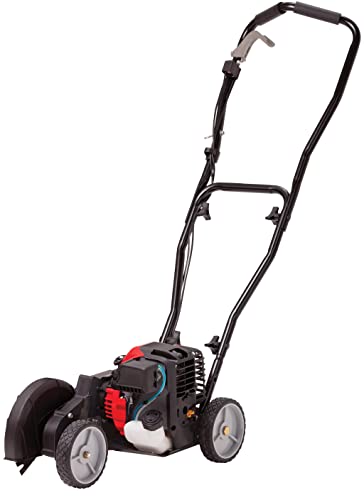
- ✓ Easy to start
- ✓ Quiet operation
- ✓ Comfortable control
- ✕ Electric start drill sold separately
- ✕ Limited edging depth
| Engine Displacement | 30cc 4-cycle engine |
| Starting Mechanism | Advanced 2-step starting (prime and pull), electric-start capable (drill bit sold separately) |
| Cutting Blade | 9-inch dual-tipped steel blade |
| Cutting Depth | Up to 1.75 inches |
| Handle Design | Fully molded ergonomic handle with handle-mounted throttle and idle controls |
| Transport Wheels | Three premium transport wheels for stability and control |
There I am, in the early morning light, trying to give my uneven lawn edges a tidy look before the neighborhood wakes up. I grab the CRAFTSMAN 30cc 4-Cycle Gas Powered Lawn Edger, and suddenly, that chore feels a bit less daunting.
The first thing I notice is how lightweight it feels in my hands. The ergonomic handle design fits comfortably, giving me good control without fatigue.
Starting it up is surprisingly easy—just prime, pull, and it roars to life with minimal effort, thanks to the advanced 2-step starting system.
The 30cc engine is impressively quiet for a gas edger, making it easier to work without annoying noise. I love that I don’t have to mix gas and oil; the 4-cycle engine handles everything smoothly.
Plus, the full-crank engine vibrates less, so I don’t feel like my arms are going to fall off after a few minutes.
The dual-tipped steel blade slices through grass and dirt with ease, creating a crisp, professional-looking edge along my driveway. The 9-inch blade depth is just right for a clean finish.
The transport wheels are a nice touch, giving me stability and making it easier to maneuver around tight corners.
And if I want to make it even easier, I can connect it to an electric-start drill—saving my arm from the pull cord fatigue. Overall, this edger makes yard work less of a hassle and more of a quick, satisfying task.
What Are the Key Features to Look for in the Best Entry Level Gas Edger?
When searching for the best entry level gas edger, there are several key features to consider for optimal performance and ease of use.
- Engine Power: A reliable gas edger should have sufficient engine power, typically ranging from 25cc to 30cc for entry-level models. This power range allows for effective cutting through grass and soil, providing a clean edge without bogging down during operation.
- Weight and Maneuverability: The weight of the edger is crucial for ease of use, especially for beginners. A lightweight design, ideally around 10 to 12 pounds, will make it easier to maneuver and handle, reducing fatigue during extended use.
- Blade Size and Type: Entry-level gas edgers usually come with a blade size between 9 to 10 inches, which is suitable for most residential edging tasks. The type of blade, whether straight or curved, also affects the precision and ease of cutting along sidewalks and flower beds.
- Starting Mechanism: A user-friendly starting mechanism, such as a spring-assisted or easy-start feature, is essential for beginners. This feature minimizes the effort required to start the engine, making it accessible for those who may not have experience with gas-powered tools.
- Adjustable Depth Settings: The ability to adjust the cutting depth allows for versatility in landscaping projects. An entry-level edger with multiple depth settings can cater to different edging needs, from shallow cuts for decorative purposes to deeper cuts for more defined edges.
- Durability and Build Quality: Look for an edger that is constructed with durable materials, such as a strong metal frame and high-quality components. This ensures longevity and reliability, particularly for those who plan to use the tool frequently.
- Ease of Maintenance: Consider how easy it is to perform maintenance on the gas edger, including changing the oil and replacing the blade. Models with tool-less access to the air filter and spark plug can significantly simplify upkeep for new users.
- Price Point: The best entry level gas edger should strike a balance between affordability and quality. A price range of $150 to $300 is typical for entry-level models, providing good options without breaking the bank.
How Do Gas Edgers Compare to Electric Edgers for Beginners?
| Feature | Gas Edgers | Electric Edgers |
|---|---|---|
| Power Source | Powered by gasoline, offering more power and longer run time. | Powered by electricity, usually requiring a cord or battery. |
| Weight | Generally heavier due to the engine, which may be challenging for some users. | Usually lighter and easier to handle, making them suitable for beginners. |
| Maintenance | Requires regular maintenance like oil changes and spark plug replacements. | Minimal maintenance needed, mainly keeping the blades sharp. |
| Cost | Typically more expensive due to the engine and fuel requirements. | Generally more affordable, especially for entry-level models. |
| Noise Level | Typically louder, which may be a concern for some users and neighborhoods. | Quieter operation, making them more suitable for residential areas. |
| Environmental Impact | Emits exhaust fumes, contributing to air pollution. | Generally more environmentally friendly, as they produce no emissions during operation. |
| Best Use Cases | Ideal for larger yards and tougher landscaping tasks. | Best for small to medium-sized lawns and basic edging tasks. |
| User Skill Level | May require more experience to handle effectively. | Designed for ease of use, making them perfect for beginners. |
What Are the Top Brands Offering Entry Level Gas Edgers?
The top brands offering entry-level gas edgers are:
- Honda: Known for its reliable engines, Honda’s entry-level gas edgers provide excellent performance and durability. These models are lightweight and easy to maneuver, making them perfect for homeowners who need to maintain their lawns and gardens without excessive strain.
- Echo: Echo gas edgers are recognized for their powerful performance and user-friendly design. They feature commercial-grade engines that deliver high torque, ensuring clean cuts and efficient edging, which is ideal for both residential and professional use.
- Craftsman: Craftsman offers a range of affordable gas edgers that are perfect for beginners. Their models typically come with adjustable cutting depths and easy-start features, making it simple for new users to achieve a well-manicured edge without complicated setups.
- Husqvarna: Renowned for their innovation and quality, Husqvarna gas edgers are designed for effortless use and long-lasting performance. They often include ergonomic designs and lightweight materials, allowing for less fatigue during extended use while still providing power for tough edging tasks.
- Ryobi: Ryobi’s entry-level gas edgers are budget-friendly yet effective, making them a great choice for new homeowners. Their models are often equipped with features like adjustable handles and easy maintenance options, ensuring a hassle-free experience for users.
What is the Typical Price Range for the Best Entry Level Gas Edgers?
Benefits of using entry-level gas edgers include their ability to handle tougher terrain compared to electric models, as they are not limited by cord length or battery life. Additionally, gas edgers typically offer greater power, allowing for a more efficient cutting process, especially in dense or overgrown areas. This efficiency translates into time savings and improved landscaping results.
When choosing an entry-level gas edger, consumers should consider looking for models with good customer reviews regarding reliability and ease of use. Brands that offer warranties and reliable customer support can also provide peace of mind. Regular maintenance, such as cleaning the air filter and checking the spark plug, can prolong the life of the edger and ensure optimal performance over time.
What Do Customers Say About Popular Entry Level Gas Edgers?
- Husqvarna 128LD: Many users appreciate the power and reliability of the Husqvarna 128LD, noting its lightweight design that makes it easy to maneuver.
- Troy-Bilt TB235: Customers often commend the Troy-Bilt TB235 for its affordability and solid performance on various terrains, especially for homeowners with smaller yards.
- Weed Eater FEING: The Weed Eater FEING is frequently highlighted for its user-friendly features, including an easy-start mechanism that appeals to beginners.
- Echo SRM-225: Users frequently praise the Echo SRM-225 for its robust engine performance and durability, making it suitable for more extensive and more demanding lawn care tasks.
- Craftsman WS205: Customers often mention the Craftsman WS205’s versatility, being able to switch attachments easily, which adds to its value for entry-level users.
The Husqvarna 128LD is favored for its blend of power and weight, allowing users to tackle edging tasks effectively without feeling fatigued. Its reliability is noted by many, making it a staple for those new to lawn maintenance.
The Troy-Bilt TB235 stands out for its price point, making it accessible for first-time buyers. Users appreciate its performance on smaller properties, where it can handle edging with ease while remaining budget-friendly.
The Weed Eater FEING garners positive reviews for its simplicity, particularly the easy-start feature, which reduces the frustration often associated with gas-powered equipment. Users find it a great option for those just starting in lawn care.
The Echo SRM-225 is often recommended for its strong engine and long-lasting construction. Many users find it capable of handling larger areas and tougher jobs, making it a great entry-level choice for those looking to invest in a more powerful machine.
The Craftsman WS205 is celebrated for its adaptability, allowing users to switch between different attachments like blowers and trimmers. This flexibility is a significant selling point for many, as it enhances the tool’s functionality for various lawn care tasks.
How Can You Maintain Your Entry Level Gas Edger for Optimal Performance?
To maintain your entry level gas edger for optimal performance, consider the following essential practices:
- Regular Cleaning: Keeping your gas edger clean is vital for its performance. After each use, wipe down the exterior and remove any grass clippings or debris from the cutting blade to prevent rust and maintain sharpness.
- Blade Maintenance: The blade is crucial for effective edging. Regularly inspect the blade for dullness and nicks; sharpening or replacing the blade as needed will ensure clean cuts and reduce strain on the engine.
- Fuel Quality: Using high-quality fuel can significantly impact your edger’s performance. Always use fresh, unleaded gasoline, and consider adding a fuel stabilizer to prevent degradation and ensure smoother operation.
- Air Filter Care: A clean air filter is essential for optimal engine performance. Check the air filter regularly and clean or replace it as necessary to ensure proper airflow and prevent engine strain.
- Spark Plug Inspection: The spark plug plays a critical role in engine ignition. Periodically check the spark plug for wear and replace it if it appears corroded or damaged to ensure reliable starting and efficient combustion.
- Oil Changes: Regular oil changes are crucial for engine longevity. Follow the manufacturer’s recommendations for oil type and change intervals to keep the engine lubricated and functioning smoothly.
- Storage Practices: Proper storage is key to maintaining your gas edger. Store it in a dry, sheltered area, and consider draining the fuel if you won’t be using it for an extended period to prevent fuel degradation and clogging.
What Safety Tips Should You Follow When Using a Gas Edger?
When using a gas edger, it’s crucial to follow safety tips to ensure a safe and efficient experience.
- Wear Protective Gear: Always wear safety glasses, gloves, and sturdy footwear when operating a gas edger. This protective gear helps shield you from debris and potential injuries that can result from the rotating blades.
- Inspect the Equipment: Before starting the edger, check for any loose parts, damage, or wear. Ensuring that the equipment is in good working condition reduces the risk of malfunctions or accidents during operation.
- Clear the Work Area: Remove any obstacles, debris, or hazards from the area you plan to edge. This not only promotes safety but also enhances the effectiveness of the edger, allowing for a cleaner cut.
- Follow Manufacturer Instructions: Read and adhere to the user manual provided by the manufacturer. This includes understanding how to start, operate, and maintain the gas edger properly, which can prevent misuse and accidents.
- Maintain a Safe Distance: Keep bystanders, children, and pets at a safe distance while operating the edger. This minimizes the risk of injury from flying debris or accidental contact with the equipment.
- Use Proper Technique: Always maintain a firm grip on the edger and use both hands while operating it. This ensures better control and reduces the likelihood of losing balance or accidentally letting the machine slip.
- Be Aware of Your Surroundings: Stay alert to your surroundings and be cautious of any nearby hazards such as power lines or uneven ground. Awareness helps you navigate safely and avoid potential accidents.
- Allow the Engine to Cool: After use, let the engine cool before refueling or performing maintenance. Gasoline can ignite if it comes into contact with hot engine parts, posing a fire hazard.